
PROLOGUE — THE CLIFFS THAT REMEMBER EVERYTHING
Between the white cliffs of the Cetina canyon, where the river carves its silver path toward the Adriatic, the wind still carries the old whispers.
Not the tourist chatter, not the hum of boats, not the laughter echoing from the beaches.
Deeper. Older.
The kind of whispers that press against the stones at night stories of men who lived harder, sailed faster, and fought with a fierceness the world had no name for.
Those were the men of Omiš.
And among their countless legends, one stands like a pillar.
The story of a nobleman believed dead.
The story of his capture.
The story of a daring rescue no empire saw coming.
A story that became the spine of Dalmatian identity the rescue of the Lost Kačić.
What follows is the fullest telling of that tale, reconstructed from fragments, folk memory, oral history, and the timeless rhythm of the sea.
PART I — THE KAČIĆ CLAN: LORDS OF THE SEA AND THE CANYON
Long before beaches, cafés, and canyoning tours, the land around Omiš belonged to one name:
Kačić.
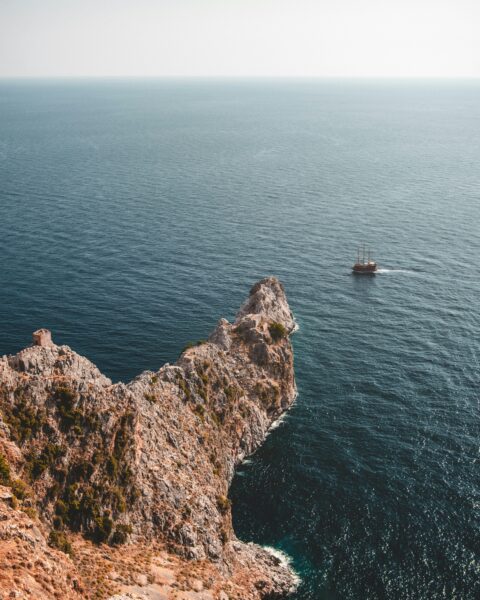
They ruled from stone fortresses that grew out of the mountains themselves.
Their banners snapped like wings in the wind.
Their galleys glided through channels no outsiders dared enter.
The Venetians called them pirati.
The locals called them zaštitnici protectors.
Because the Kačići didn’t pirate for greed.
They controlled the sea to control their own destiny.
Every ship entering the channel between Brač and the mainland passed under their watchful eyes.
And when the Venetians tried to tax them, intimidate them, or force tribute…
The Kačići responded with the silence of steel.
Their power rested on three pillars:
The Cliffs — From Fortica they could see sails hours before they arrived.
The River Cetina — A natural highway from the mountains to the sea, impossible for large warships to penetrate.
Loyalty — Omiš people didn’t betray each other. Not for money. Not for fear. Not for empires.
It’s this loyalty that the Venetians underestimated and would come to regret.
PART II — THE LAST VOYAGE OF THE KNEZ
The Kačić nobleman remembered simply as the Knez was respected for his judgment and feared for his skill in battle.
He commanded a small escort vessel patrolling the trade routes between Brač and Makarska.
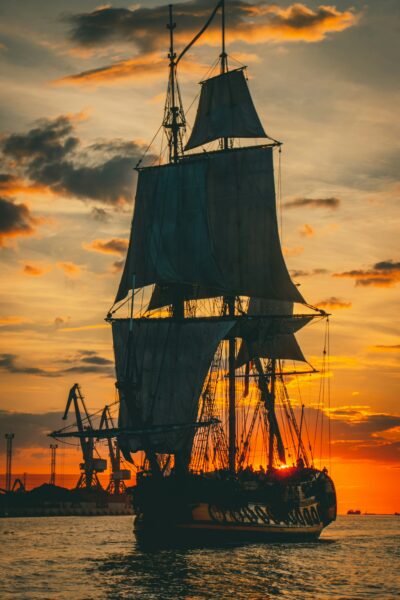
One morning, a heavy fog rolled from the west a sign Dalmatian sailors always considered dangerous.
Fog hides everything.
Especially enemies.
From inside the cloud came the rhythmic thump of oars.
Too deep for local boats.
Too many for friendly ships.
“Venetians,” the Knez muttered.
He barely finished the word before the fog split open and a Venetian war galley emerged, its bronze ram glinting like a blade.
Shouts erupted.
Arrows flew.
The Knez’s crew fought fiercely, but they were outnumbered twenty to one.
The Venetian commander had simple orders:
“Bring me the Kačić alive. He will make a fine trophy for the Doge.”
The Knez struck down two soldiers before a blow to the head dropped him onto the deck.
When he woke, he was chained to an oar bench deep in the belly of the ship.
The Venetians didn’t ransom him.
They didn’t announce his capture.
They wanted him to vanish.
And so he did.
Months turned into a year.
The Kačići searched… then mourned.
He was declared dead.
The cliffs repeated his name less and less.
Until they didn’t at all.
PART III — YEARS IN CHAINS
Life on a Venetian galley was designed to break men.
Rowers were chained by the ankles.
They slept on the same benches they rowed from.
They ate little, drank less, and endured the sun like an open flame.
The Knez, once surrounded by honor, now breathed in darkness.
Every exhale tasted of sweat, pitch, and hopelessness.
He marked days by the pain in his muscles.
He marked seasons by the temperature of the chains.
But he survived.
Not because he hoped to return but because he refused to let the Venetians be the ones who killed him.
His hatred became fuel.
His memories became armor.
And his silence frightened the guards.
The Kačić noble did not scream.
He did not beg.
He waited.
For what, he did not know.
But fate was already moving.
PART IV — A MERCHANT’S WHISPER THAT CHANGED EVERYTHING
One afternoon, years after the Knez’s disappearance, a merchant ship anchored near Omiš bringing wine, grain, and… rumors.
Travelers spoke of a Venetian war galley stopping in Trogir, resupplying with water and fodder.
And among its chained rowers, a man had shouted a name during a punishment beating.
Not a Venetian name.
Not a Slavic name.
A name from these cliffs.
The merchant didn’t understand its importance, but the villagers did.

Within hours, the rumor reached Fortica.
Within minutes, the Kačić captains gathered.
For the first time in years, people dared whisper:
“He might be alive.”
And if he was alive… they would bring him home.
PART V — THE SECRET COUNCIL IN FORTICA
The captains of Omiš met at midnight in the fortress.
No torches only lanterns covered with cloth.
The sea below them mirrored the moon, black and silver, like a drawn blade.
They discussed possibilities, dangers, traps, and consequences.

The Venetians were not fools.
Taking back a noble prisoner from their galley was an act of war.
But the decision was unanimous.
“If he lives, we save him.
If he dies during rescue, we bury him in our land.
If we die, we die for our own.”
This oath bound them.
They prepared three attack vessels:
narrow hulls
silent oars
darkened sails
carved figureheads designed to cut water with minimal splash
These weren’t pirate ships.
They were ghosts.
PART VI — HUNTING THE VENETIAN GALLEY
For days the Kačić scouts tracked the Venetian fleet from island to island.
The galley was moving south slow, tired, weighed by its chained rowers and cargo.
The Kačići waited until it approached the treacherous waters between Brač and Makarska.
A place where wind shifts quickly and shadows cling to the coast.

No Venetian captain liked being there at night.
But the Omiš pirates were born for it.
They ambushed when the moon was thin, the sea calm, and the guards half asleep.
PART VII — THE ATTACK
The Venetian galley cut through the dark like a beast.
Lanterns flickered.
Guards leaned on their spears, bored.
Then the wind changed.
The sea flattened.
A Kačić captain whispered:
“Now.”
The three Omiš vessels emerged from the black waves like shadows rising to breathe.
Silent.
Fast.
Unseen until too late.
Grappling hooks flew.
Ropes tightened.
Boards slammed together.
The Omiš pirates climbed with the quiet fury of men who had nothing to lose.
The first kills were silent.
Daggers.
Throats.
No screams.
Then one Venetian shouted:
“Pirate! Pirate from Omiš!”
Chaos erupted.
Swords clanged.
Arrows hissed.
Sailors fell into the sea.
Blood slicked the deck.
In the belly of the ship, rowers heard the fighting and froze.
The Knez opened his eyes for the first time in hours.
He sensed something.
A rhythm he hadn’t heard in years.
The rhythm of Omiš boots on wood.
PART VIII — THE MOMENT THEY FOUND HIM
A Kačić warrior kicked open the hatch.
Torchlight flooded the hold.
Rowers stared.
And then one pirate froze, staring at a man chained at the far bench.
“Knez…?”
The chained noble lifted his head.
Slowly.
As if remembering the movement.
In the torchlight, his eyes reflected the cliffs of his homeland.
“It’s him!” shouted another.
Five men broke his chains two using axes, three defending the hold.
A Venetian officer charged them, screaming orders.
The Kačići cut him down.
Alarms blared across the ship.
Battle cries filled the air.
But nothing would stop them now.
They carried the Knez up the stairs as he stumbled, too weak to run but refusing to be dragged.
“Let me walk,” he whispered.
And he did.
One step at a time, toward the deck, toward the wind, toward freedom.
PART IX — ESCAPE INTO THE NIGHT
The Kačić ships pushed off just as reinforcement galleys lit signal torches.
Arrows rained.
Oars splashed.
Venetians screamed.
But the Omiš pirates knew every current, every gust, every trick of these waters.
Their boats cut through the dark faster than the heavy Venetian galley could ever follow.
The Knez sat in the middle boat, wrapped in a cloak.
He stared at the cliffs of the mainland and for the first time in years, he allowed himself to feel something:
Hope.
PART X — THE RETURN THROUGH THE CETINA RIVER
As dawn crept over the mountains, the three pirate vessels approached the river mouth.
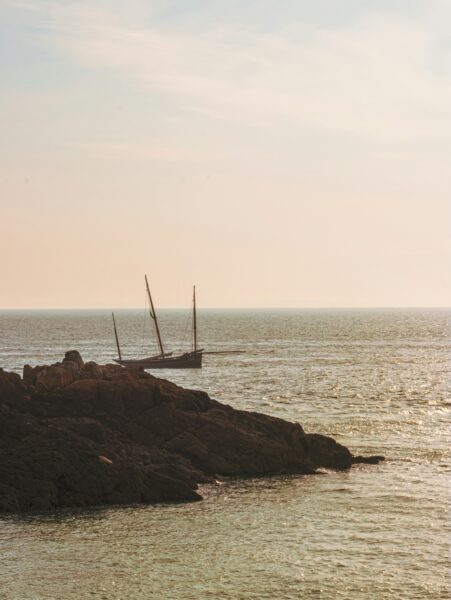
Villagers on the banks heard horns.
Not the mournful sound of funerals.
The triumphant blast of homecoming.
People gathered.
Children ran ahead, shouting.
The Knez stepped onto the dock.
Thin.
Scarred.
But alive.
Women cried openly.
Men bowed.
Even the cliffs seemed to exhale.
He turned toward the canyon, placed a hand on the stone wall beside him, and whispered:
“You waited for me.”
PART XI — THE LEGEND’S AFTERLIFE
Years later, the story became more than a tale.
It became:
a standard for loyalty
a warning to enemies
a symbol of Dalmatian defiance
a spiritual backbone of Omiš identity
The Venetians never forgot the humiliation.
And Omiš never forgot the rescue.
Even today, canyoning guests descending into the Cetina gorge feel that same energy the wildness, the secrecy, the unstoppable determination that once defined this town.
The cliffs still carry the echoes.
The river still remembers the oars.
And every gust of wind between the rocks tells the same truth:
The Kačići were not just pirates.
They were guardians.
And no one they loved was ever left behind.
EPILOGUE — THE SPIRIT THAT LIVES ON
When travelers leap into emerald pools, lower themselves down waterfalls, or hear the roar of the canyon, they’re not just experiencing nature.
They’re touching the same stones that hid fleeing pirates.
They’re breathing the same air that carried war cries.
They’re standing where legends walked.
The story of the Lost Kačić is not fantasy.
It’s not just history.
It’s the heartbeat of Omiš.
A tale carried by cliffs.
Protected by the river.
Remembered by the sea.
And now shared with the world.