
Croatia is a master of disguise. To the casual observer, she is a Mediterranean postcard: a coastline of a thousand islands, terracotta roofs of ancient stone towns, and a sea so clear it looks like liquid glass. But if you stop there, you have only read the cover of the book.
As someone who has spent more nights under the stars than under a ceiling, and more hours in the rushing currents of canyons than on paved roads, I can tell you this: The true heart of Croatia beats in its wild places.
Our National Parks are not just “protected areas.” They are the last strongholds of a prehistoric Europe. They are places where wolves still howl at the Velebit moon, where griffon vultures glide over deep blue abysses, and where water has spent millions of years sculpting stone into impossible cathedrals.
In this guide, I’m taking you on a journey through all eight of these sanctuaries. This isn’t a list of facts you can find on a ticket stub. This is the story of the land, the myths, and the raw energy that flows through Croatia. And when we reach the end, I will tell you why simply seeing these places is only the beginning and how you can truly live them.
1. Plitvice Lakes (Plitvička Jezera): The Theatre of Eternal Change
The Legend of the Black Queen
Long ago, a terrible drought struck the region of Lika. The rivers dried up, the crops withered, and the people and animals were dying of thirst. They prayed to the heavens for help. Legend says that the Black Queen appeared with her magnificent retinue and took pity on them. She summoned a storm so powerful that the rain fell until the water filled sixteen lakes. These lakes remain today as a gift from the Queen, a reminder that water is the blood of the earth.

source: sergei-gussev/pexels
The Science of Magic: Travertine (Sedra)
When you walk through Plitvice, you aren’t just looking at water; you are looking at a living, breathing laboratory. The magic ingredient here is sedra (travertine). As the water flows over moss and algae, it deposits calcium carbonate, creating natural dams. These dams grow by about 1 to 3 centimeters every year. This means the Plitvice you see today is not the same Plitvice your grandfather saw, and it won’t be the same Plitvice your children will see. The waterfalls are constantly moving, growing, and shifting.
The Journey through the Lakes
The park is split into the Lower Lakes and the Upper Lakes.
The Lower Lakes (Donja Jezera): This is the home of the “Veliki Slap” (Great Waterfall), the tallest in Croatia at 78 meters. The canyon here is narrow, with steep limestone cliffs that echo the roar of the water. This is the “blockbuster” view of Plitvice.
The Upper Lakes (Gornja Jezera): Here, the energy changes. The area is wider, the lakes are separated by thick barriers of mossy trees, and the forest is denser. This is where you feel the ancient presence of the “Dinaric” jungle. It is quieter, more mystical, and perfectly showcases the intricate lace work of tiny streams flowing through the roots of beech trees.
Insider Perspective: Everyone visits in July. Don’t do that. Visit in late October when the beech forests turn into a riot of copper and gold, or in January when the falls freeze into massive glass sculptures. If you want to escape the crowds, take the long trail “K” that circles the entire lake system most tourists are too lazy to walk more than two kilometers, leaving the deeper parts of the park entirely to you and the birds.
2. Krka National Park: The Powerhouse of Dalmatia
While Plitvice is a delicate masterpiece, Krka is a roaring force of nature. This river doesn’t just flow; it commands the landscape of Dalmatia. It is a river of history, power, and life.
Where Nikola Tesla Met the River
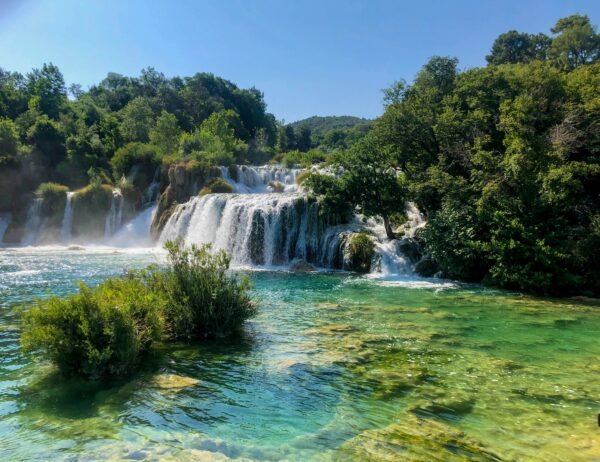
Most people don’t know that Krka was the site of a global revolution. In 1895, the Jaruga Hydroelectric Power Plant was opened under the Skradinski Buk waterfall. It was the second oldest in the world, opening just two days after the famous plant at Niagara Falls. Because of this river, the city of Šibenik had electric streetlights before London or Rome. The spirit of innovation is literally built into the spray of these waterfalls.
source: fabian-kuhne/pexels
The Seven Crowns of Krka
The river has seven main travertine cascades, each with its own personality:
Bilušića Buk: The loud entrance of the river into the canyon.
Brljan: Where the water spills over a wide, lush barrier.
Manojlovac: Many consider this the most beautiful. At 32 meters high, it is a wall of water framed by Roman ruins.
Rošnjak: The smallest and most secretive.
Miljacka Slap: Located near a massive cave and an old power plant.
Roški Slap: Known as the “Necklace” because of the countless tiny cascades that look like silver jewelry draped over the rocks.
Skradinski Buk: The grand finale. A massive, wide amphitheater where the river finally surrenders its power before meeting the sea.
The Spiritual Heart:
Visovac In the middle of the river’s widening, there is an island. Visovac is a tiny, emerald teardrop that has been home to Franciscan monks since the 15th century. Their library contains a rare 15th century illustrated Aesop’s Fables. To stand on the island, surrounded by tall cypress trees and the sound of distant waterfalls, is to understand what peace truly means.
Insider Tip: Take the boat trip to the Krka Monastery. It is built over ancient Roman catacombs, and the atmosphere in that part of the canyon is completely different, wilder, drier, and more rugged than the lush Skradinski Buk.
3. Sjeverni Velebit (Northern Velebit): The Kingdom of the Stone Giants
This is my favorite place in the world. Velebit is not just a mountain; it is the backbone of Croatia. It is a place of harsh winds, jagged limestone, and absolute silence. Northern Velebit is the youngest of our parks, established to protect a landscape that looks like it belongs on another planet.
source: ante-hamersmit/pexels
The Premužić Trail: The Path of the Gods In the 1930s, an engineer named Ante Premužić did the impossible. He built a 57 kilometer trail through the most impassable, rugged terrain of the Velebit peaks. He used no concrete, only the “dry stone” technique fitting rocks together like a giant puzzle. The result? A trail that stays at almost the same altitude, allowing you to walk through the heart of the jagged Rožanski Kukovi peaks without ever having to gasp for air. It is the most beautiful walk in Europe, hands down.
The Climate War Northern Velebit is where the Mediterranean and Continental climates fight for dominance. This creates “sinkholes” deep depressions in the ground where the temperature can be 10 degrees colder than just a few meters away. Because of this, you will see Alpine plants growing right next to Mediterranean herbs.
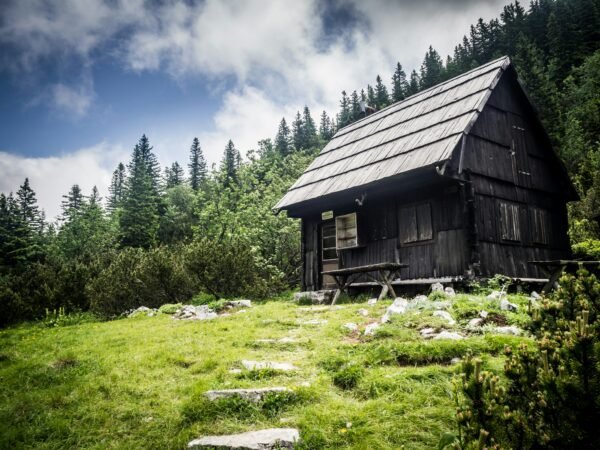
Insider Tip: Stay at the Zavižan Mountain Hut. It is one of the oldest meteorological stations in Croatia. Watch the sun set over the Adriatic islands of Rab and Pag. When the “Bura” wind starts to blow, you will feel the true power of the mountain. You aren’t just a guest here; you are at the mercy of the peaks.
4. Paklenica National Park: The Cathedral of the Vertical
Where the Velebit mountain finally meets the sea, it splits open in two gargantuan canyons: Velika Paklenica and Mala Paklenica. This is a vertical world.

source: marko-brecic/pexels
The Mecca of Climbers
If you see people walking around with ropes and clinking metal gear, you’re in the right place. The cliff of Anića Kuk is a 300 meter vertical wall that is legendary among European climbers. But Paklenica is for everyone. The hike through the main canyon feels like walking through a gateway to a hidden realm. The cliffs rise so high on both sides that they swallow the sun.
The Underground Secrets Deep in the canyon, Tito’s secret “Bunkers” were carved into the mountain during the 1950s as a shelter against a nuclear attack. Today, they are a modern museum. It’s a surreal experience to walk from the hot Mediterranean sun into the cool, dark belly of the mountain.
Insider Tip: Most people walk up to the mountain hut for a bean stew (grahi). But if you want a challenge, hike to the Manita Peć cave. The formations inside are breathtaking, and the view from the entrance looking back down into the canyon is the best photo op in the park.
5. Brijuni National Park: The Island of Presidents and Dinosaurs
Brijuni is unlike any other park. It is an archipelago of 14 islands off the coast of Istria that blends nature, history, and a touch of the surreal.
source: dominik-puskas/pexels
The footprints of Giants
Millions of years ago, dinosaurs walked across the mud that eventually became the Brijuni islands. You can still see over 200 dinosaur footprints etched into the rocks today.
Tito’s Summer Paradise For nearly 30 years, this was the private residence of Josip Broz Tito. He hosted world leaders, from Nehru to Castro, and Hollywood royalty like Elizabeth Taylor and Sophia Loren. Because many leaders brought him exotic animals as gifts, Brijuni has a Safari Park. It is a bizarre and beautiful sight to see a zebra or an elephant grazing with the blue Adriatic Sea in the background.
The 1600 Year Old Olive Tree One of the oldest olive trees in the Mediterranean still bears fruit here. It has survived wars, empires, and changing nations, standing as a silent witness to the passing of time.
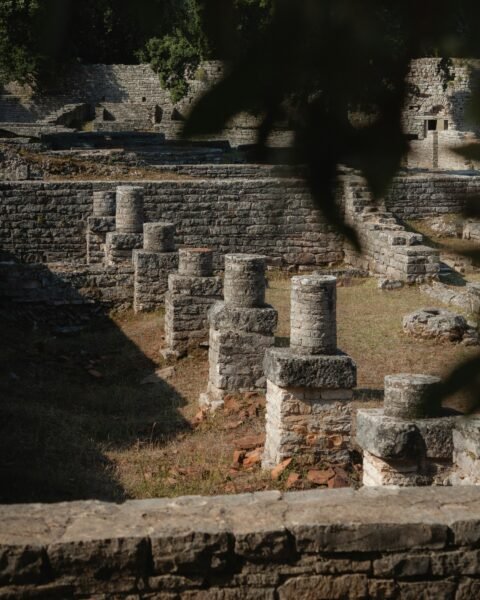
Insider Tip: Don’t take the tourist train. Rent a bike. It’s the only way to find the hidden bays where you can swim in crystal clear water with Roman ruins just a few meters away.
6. Risnjak National Park: The Green Mystery
Located in Gorski Kotar, the “Croatian Switzerland,” Risnjak is a place of deep, dark forests and hidden valleys. It is named after the Ris (Lynx), the most secretive predator in Europe.
The Source of the Kupa Deep in the park lies the source of the Kupa River. It is a “gavial” spring a turquoise, bottomless pool at the foot of a massive cliff. The water is so still it looks like a mirror, but underneath, it is a powerful surge of ice cold water.
source: mesh /pexels
The Biodiversity Hub In an area of just a few square kilometers, you can find brown bears, wolves, and lynx. The flora is equally diverse, with over 1,000 species of plants. It is a place for the true naturalist, the person who finds joy in the smell of pine needles and the sound of wind through the silver firs.
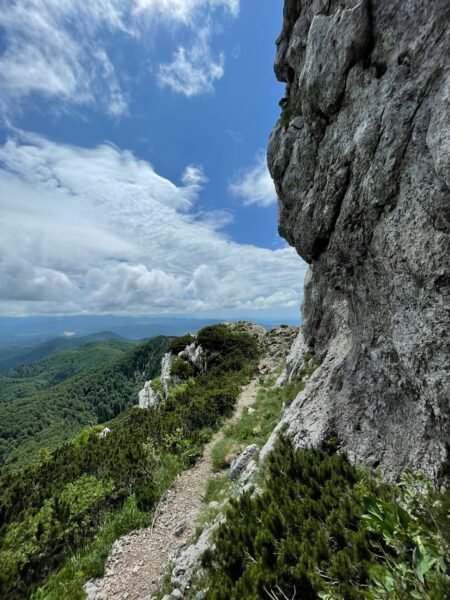
Insider Tip: Hike to the peak of Veliki Risnjak. The view from the top is unique because you can see both the Slovenian Alps and the Croatian islands at the same time.
7. Mljet National Park: The Island of Calypso
Mljet is the greenest island in Croatia. According to legend, Odysseus was shipwrecked here and the nymph Calypso kept him as her prisoner of love for seven years. It’s easy to see why he stayed.
The Saltwater Lakes
The park’s main feature is two deep bays, the Great Lake and the Small Lake, connected to the sea by tiny channels. Because the circulation is limited, the water is much warmer than the open sea. In the middle of the Great Lake lies a 12th century Benedictine monastery on its own tiny island. It is the definition of “picturesque.”
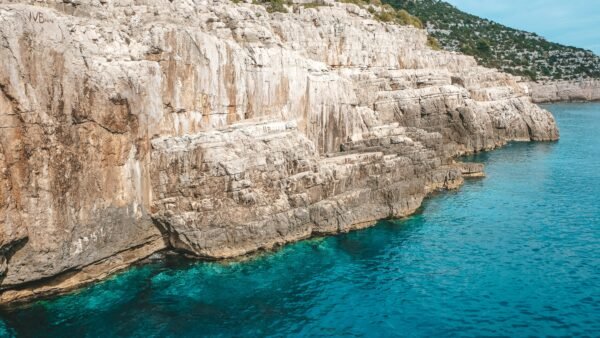
source: kevin-charit /pexels
Insider Tip: Rent a kayak. The lakes are perfectly calm, and paddling to the monastery island is a quiet, meditative experience. If you visit in the late afternoon, the sun setting behind the pine trees creates a golden glow on the water that is pure magic.
8. Kornati National Park: The Stone Fleet
“On the last day of Creation God desired to crown His work, and thus created the Kornati Islands out of tears, stars and breath.” George Bernard Shaw.
Kornati is an archipelago of 89 islands and reefs that look like they were made of bone and silver. There is almost no vegetation, only stone. It is a nautical labyrinth of incredible beauty.
The Crowns (Kruna) The islands are famous for their “crowns” massive vertical cliffs that face the open sea. Some of them drop 90 meters deep into the water. For sailors, this is the ultimate playground.

source: joachim-pressl /pexels
Insider Tip: You need a boat to see Kornati properly. Find a small local excursion that includes a stop at one of the “Konobas” (local taverns) .
The Great Divide: Are You a Spectator or a Participant?
If you have read this far, you understand the grandeur of Croatia. You’ve seen the photos of Plitvice’s turquoise water and the stone giants of Velebit. These parks are spectacular, and they are protected so that we can admire them.
But there is a fundamental truth about National Parks: They are designed for looking, not for doing.
In a National Park, there is a fence. There is a wooden boardwalk. There is a sign that says “Do Not Touch.” You are separated from the nature by a barrier of rules. You are watching the movie, but you aren’t in the movie. You see the waterfall from 50 meters away, but you don’t feel its spray. You see the canyon from a viewpoint, but you don’t feel the ancient cold of its stone walls.
If you want to cross that line, if you want to stop being a tourist and start being an explorer, then you need to come to the Cetina River.
Canyoning: The Real Experience of the Wild
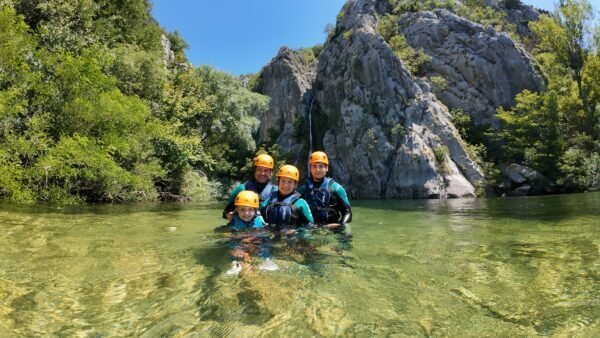
Located in Omiš, the Cetina River canyon is a place where there are no boardwalks. There are no fences.
In the Park, you walk over the water. With us, you are in the water. You swim through crystal clear pools that have been hidden for millennia.
In the Park, you photograph the waterfall. With us, you descend the waterfall. You feel the rope in your hands, the adrenaline in your chest, and the power of the river as you rappel down a 55 meter cliff (Gubavica).
In the Park, you follow the crowd. With us, you are in a narrow canyon where the cliffs rise 200 meters above you, and the only sound is the rushing of the river and the beating of your own heart.
Canyoning is the “Level Up” for anyone who has visited Plitvice or Krka and felt that itch to go deeper. It is the ultimate way to respect the nature of Croatia by challenging yourself against it, by feeling its temperature, its texture, and its raw power.
Don’t just witness the beauty of Croatia. Become a part of it.
The canyon is waiting. Are you?